A Decade Ahead: How Africa's Real-Time Payment Rails Became the Blueprint Wall Street Is Now Copying
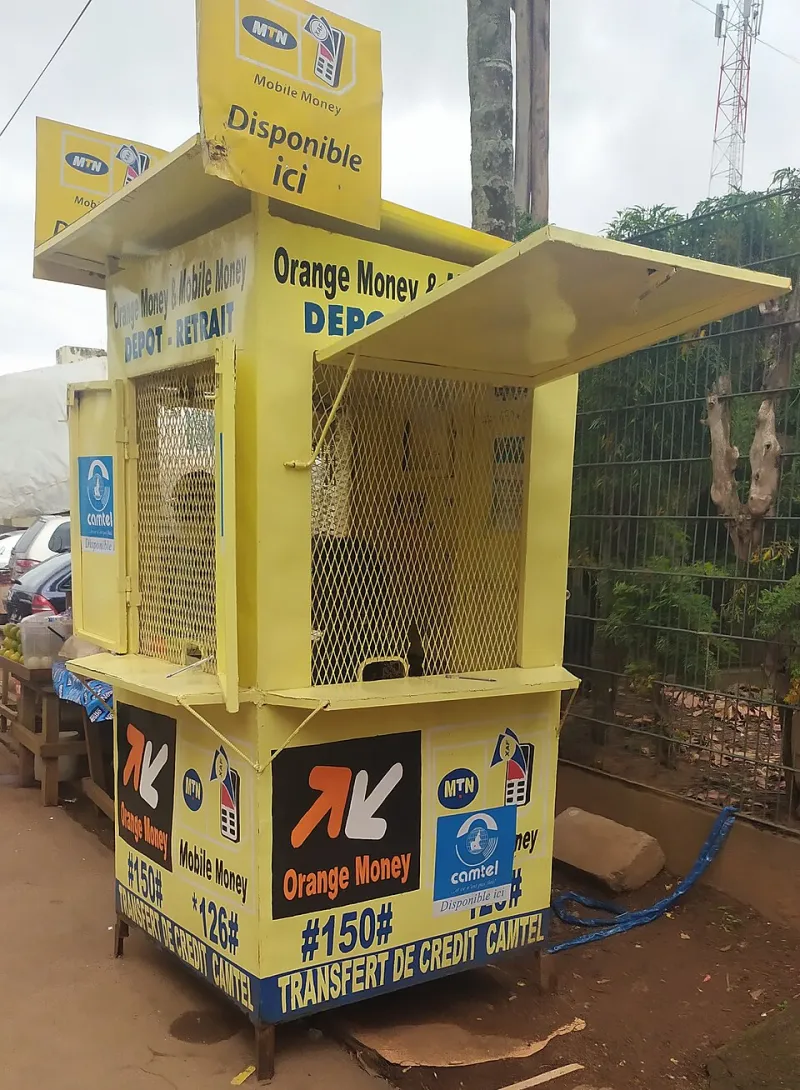
Photo: Minette Lontsie, CC BY-SA 4.0, via Wikimedia Commons
When the Federal Reserve finally launched FedNow in 2023, American banks celebrated their entry into real-time payments. In Nairobi, Lagos, and Accra, the reaction was less a celebration than a shrug. East Africa had been settling money transfers in seconds since 2007 — the year M-Pesa launched on basic mobile handsets, no bank account required, no smartphone, no ceremony.
The gap between those two moments is more than a curiosity. It is a case study in how constraint-driven engineering produced the most advanced real-time payments laboratory on earth, and why American financial institutions now find themselves rebuilding, at enormous expense, systems African engineers consider table stakes.
The M-Pesa Precedent
M-Pesa's achievement is well documented but often misunderstood. It was not merely a mobile wallet; it was a full payments network constructed outside the banking system, distributed through thousands of neighborhood agents, and priced for customers who might transact with the equivalent of a dollar at a time. Within a decade, mobile money accounts across Sub-Saharan Africa outnumbered bank accounts — a financial inclusion milestone the US has still not approached, where millions of adults remain unbanked or underbanked.
The architecture mattered as much as the adoption. African payment systems were built interoperable from the start, because no single provider could achieve scale alone. That interoperability, layered across 54 countries and dozens of currencies, forced the creation of continental rails such as Pan-African Payment and Settlement System (PAPSS), which settles cross-border trades in local currencies in real time. The United States, by contrast, still relies heavily on an ACH system that takes days and a card network that charges merchants percentages designed decades ago.
The Exporters
A new generation of founders is now running the arbitrage in reverse: taking African-built payment infrastructure to Western markets. Flutterwave and Paystack — the latter acquired by Stripe in a deal reportedly worth over $200 million — proved that African payment engineering could meet global standards and, in some respects, set them. Cross-border remittance companies founded by African entrepreneurs are undercutting legacy Western Union-style corridors, moving dollars to naira or cedis in minutes at fees that traditional money transfer operators cannot match.
American fintech executives have started paying for the expertise directly. Engineers who cut their teeth on interoperability challenges in Kampala or Kigali are being recruited into US payments companies at a premium, precisely because they have already solved problems — offline transactions, micro-denominations, agent networks — that American fintechs are only now confronting as they chase financial inclusion mandates.
What Instant Payments Actually Require
The lesson Wall Street is absorbing is that real-time payments are not a feature; they are a re-architecture. FedNow adoption has been slow precisely because American banks must retrofit instant settlement onto legacy cores built for batch processing. African systems never had legacy cores. They built instant, mobile-native, low-cost settlement as the foundation, and everything else — lending, insurance, savings — was layered on top of those rails.
That sequencing explains the continent's flourishing embedded finance scene. When payments settle instantly and cost fractions of a cent, lending against transaction history, micro-insurance, and pay-as-you-go financing all become viable. American neobanks, still subsidizing interchange and burning venture capital on customer acquisition, are studying that model with growing seriousness.
Reading the Playbook
None of this means African fintech has finished the job — regulatory fragmentation, currency volatility, and infrastructure gaps remain real constraints. But the direction of intellectual traffic has reversed. For two decades, the assumption was that payments innovation flowed from West to rest. The record now shows the opposite: the world's most instructive experiment in instant, inclusive, low-cost money movement ran for years on the African continent, and the most sophisticated players in the American market are finally doing the reading.