Green Founders on the Frontlines: How Africa's Climate Tech Entrepreneurs Are Solving Problems the Rest of the World Can't
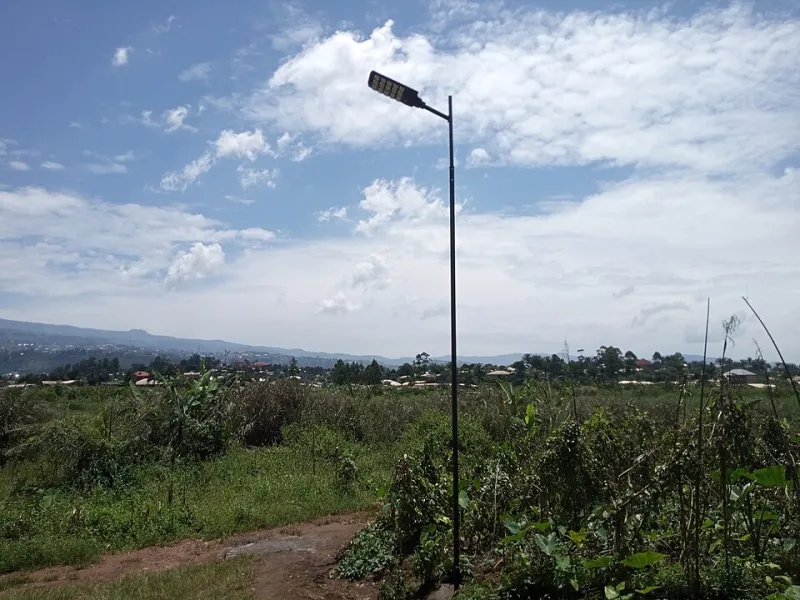
Photo: Lontum, CC BY-SA 4.0, via Wikimedia Commons
For decades, the narrative surrounding Africa and climate change has been framed largely in terms of vulnerability—rising temperatures, persistent droughts, and food insecurity threatening hundreds of millions of lives. That framing, while not inaccurate, has increasingly obscured a more compelling story: Africa is quietly becoming the world's most productive laboratory for practical climate innovation.
Across the continent, entrepreneurs are developing technologies that address the same environmental crises threatening communities from California to Bangladesh. The difference is that African founders are building these solutions under real-world pressure, with limited resources, and for markets that demand affordability above all else. The result is a class of green technologies that are not only effective—they are extraordinarily scalable.
Necessity as the Engine of Innovation
The numbers behind Africa's climate exposure are stark. According to the Intergovernmental Panel on Climate Change, the continent contributes less than 4 percent of global greenhouse gas emissions yet bears a disproportionate share of climate-related consequences. Roughly 600 million people on the continent still lack reliable access to electricity. Agricultural drought threatens the livelihoods of smallholder farmers who collectively feed a significant portion of the population. Water scarcity affects communities across the Sahel, the Horn of Africa, and Southern Africa simultaneously.
These conditions have not produced despair so much as urgency. Founders building in this environment cannot afford theoretical solutions or decade-long development timelines. They need products that work in the field, today, at a price point accessible to communities earning under $10 per day. That constraint, counterintuitively, is their greatest competitive advantage.
"When you build for the hardest market, you build for everyone," said Cynthia Mucaria, co-founder of Kenyan agri-tech firm SunRoot, which deploys solar-powered drip irrigation systems to smallholder farms in arid regions. "Our technology works in places with no grid, no consistent water supply, and no technical support infrastructure. That makes it very easy to adapt for drought-affected farms in Arizona or parts of southern Spain."
The Startups Redefining Green Tech
SunRoot is far from alone. Across the continent, a cohort of climate tech companies is drawing attention for the sophistication and adaptability of their solutions.
Husk Power Systems, originally incubated in India but deeply embedded in African rural energy markets, has partnered with Nigerian and Tanzanian entrepreneurs to deploy modular biomass-and-solar microgrids that power entire villages. The model has since attracted replication interest from rural communities in Southeast Asia and Latin America.
Sanivation, a Kenyan startup, has developed a process to convert human waste into clean-burning fuel briquettes—addressing sanitation deficits while simultaneously reducing dependence on charcoal, a leading driver of deforestation. The company has expanded operations across East Africa and is in early-stage discussions with municipal governments in West Africa and South Asia.
Releaf, a Nigerian agri-processing startup, uses proprietary hardware and machine-learning algorithms to dramatically improve the efficiency of palm oil processing for smallholder farmers. By reducing waste and increasing yield, the company addresses both food security and the environmental cost of inefficient processing—a dual-impact model that has caught the attention of climate-focused venture funds in New York and London.
Western Capital Follows African Ingenuity
Investors in the United States and Europe are paying close attention. Climate tech investment on the African continent reached approximately $2.6 billion in 2023, according to data from the African Private Equity and Venture Capital Association—a figure that, while modest by Silicon Valley standards, represents a significant acceleration from previous years.
Firms including Breakthrough Energy Ventures, the climate-focused fund backed by Bill Gates, have signaled growing interest in African startups as part of their global portfolio diversification strategies. Meanwhile, impact-oriented investors such as Acumen, Omidyar Network, and Novastar Ventures have maintained long-term commitments to the continent's green economy.
What is drawing this capital is not charity—it is market logic. Africa's population is projected to reach 2.5 billion by 2050, with urbanization accelerating rapidly. The demand for clean energy, water infrastructure, and sustainable food systems will be enormous, and the companies best positioned to meet that demand are those already operating at the intersection of affordability and innovation.
"We're not funding these companies because it's the right thing to do," one New York-based climate fund manager told Future Hub Africa. "We're funding them because they're solving problems at a cost structure no Western startup can match, and the addressable market is global."
Why Africa's Solutions Travel Well
Perhaps the most underappreciated aspect of African climate tech is how readily its innovations transfer to other geographies. The modular, low-cost, off-grid architecture that defines many of these startups maps directly onto the needs of underserved communities in rural America, the American Southwest facing water shortages, and developing economies across Asia and Latin America.
Solar irrigation technology developed for Kenyan farmers has been piloted in drought-affected regions of Morocco and Pakistan. Water purification systems designed for informal settlements in Nairobi are being evaluated for deployment in flood-affected communities in Bangladesh. The engineering logic is the same: build lean, build durable, build for the edge case.
For US investors and policymakers watching the global energy transition unfold, this is a moment that demands attention. The next generation of climate solutions may not emerge from a Stanford lab or a Silicon Valley accelerator. They may arrive, already tested under the most demanding conditions imaginable, from Nairobi, Lagos, Accra, or Kigali.
The Road Ahead
Challenges remain significant. African climate tech startups frequently cite access to growth-stage capital as a persistent obstacle, with many investors still preferring early-stage bets over the larger checks needed to scale operations across borders. Regulatory complexity, infrastructure gaps, and foreign exchange volatility continue to complicate expansion.
Nevertheless, the trajectory is unmistakable. Africa's climate entrepreneurs are no longer waiting for the world to solve their problems. They are solving those problems themselves—and in doing so, they are building some of the most commercially viable and globally relevant green technologies in existence.
The world's most urgent environmental challenges may well find their most practical answers on the African continent. For investors, partners, and policymakers willing to look beyond traditional innovation corridors, the opportunity is both significant and immediate.