Healing the Continent: How African Biotech Founders Are Cracking Disease Codes That Big Pharma Left Behind
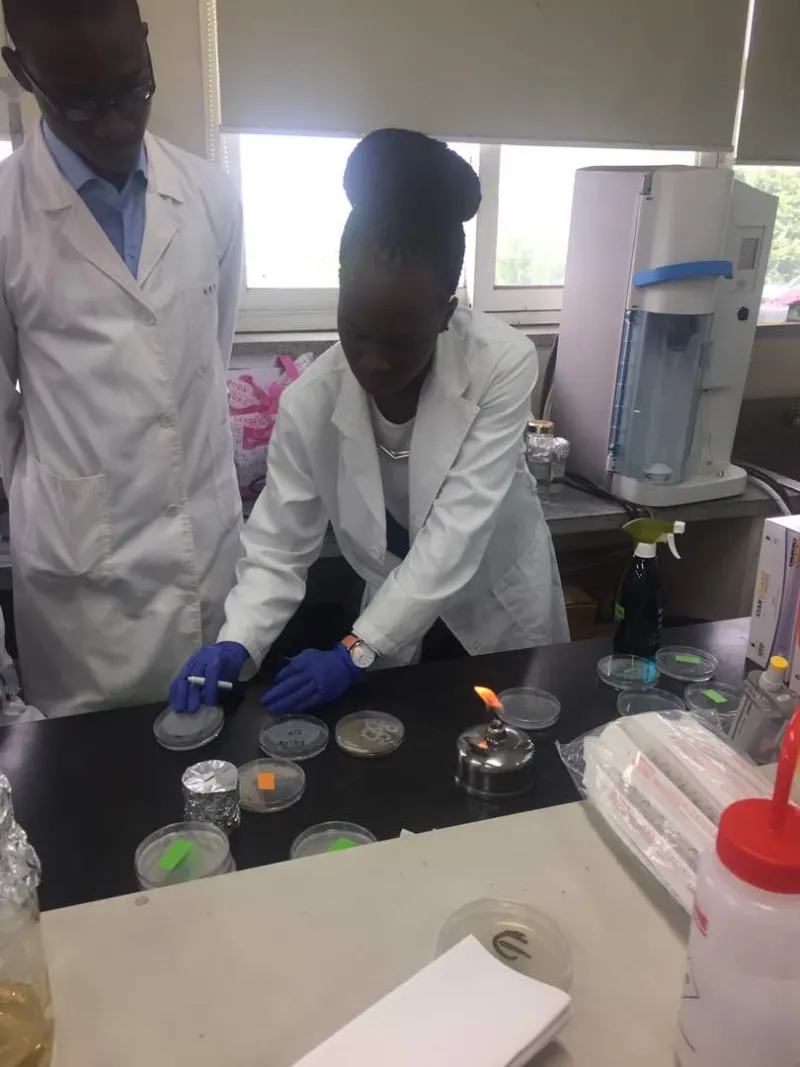
Photo: Atidamilare, CC BY-SA 4.0, via Wikimedia Commons
For decades, the global pharmaceutical industry operated on a simple, if uncomfortable, calculus: if a disease predominantly afflicted low-income populations in the developing world, it was unlikely to attract serious research dollars. Malaria, tuberculosis, sickle cell anemia, and a cluster of neglected tropical diseases claimed millions of lives each year while blockbuster drug pipelines remained focused elsewhere. Today, that calculus is being disrupted — not by a multinational corporation, but by a generation of African biotech founders who decided that waiting was no longer an option.
The results are beginning to turn heads in boardrooms from Boston to San Francisco.
A Homegrown Response to a Systemic Failure
The scale of the problem these entrepreneurs are addressing is difficult to overstate. Malaria alone kills an estimated 600,000 people annually, with more than 90 percent of those deaths occurring in sub-Saharan Africa. Tuberculosis remains the world's deadliest infectious disease outside of COVID-19. Sickle cell anemia affects roughly 300,000 newborns per year globally, the vast majority in Africa. Yet, for most of the twentieth century, the global health research establishment treated these statistics as footnotes rather than imperatives.
African biotech entrepreneurs are filling that gap with remarkable ingenuity. What distinguishes their approach is not simply that they are solving African problems — it is that they are solving them with tools and methodologies calibrated specifically for African contexts, including limited cold-chain infrastructure, variable electricity supply, and healthcare systems that rely heavily on community health workers rather than specialist physicians.
Spotlight: Diagnostics Reimagined
Consider the work emerging from companies like Matibabu, a Ugandan health-tech startup that developed a non-invasive malaria diagnostic device. Traditional rapid diagnostic tests require a blood draw and trained personnel. Matibabu's device uses a smartphone attachment and light sensors to detect malaria through the skin — no needles, no laboratory, no specialist required. In rural communities where the nearest clinic may be hours away, that distinction is the difference between a diagnosis and a death.
Similarly, Nigerian startup 54gene built one of Africa's most significant genomic biobanks before expanding its research partnerships internationally. The company's founding premise was straightforward but consequential: African genetic data is chronically underrepresented in global research databases, which means drugs and diagnostics developed from those databases may be less effective for African patients. By aggregating and analyzing African genomic data at scale, 54gene positioned itself not merely as a regional player but as a critical data partner for global pharmaceutical research.
Sickle Cell Innovation on a Shoestring
Perhaps nowhere is the ingenuity-under-constraint narrative more vivid than in the fight against sickle cell anemia. Novartis and other Western pharmaceutical firms have recently entered this space — but African entrepreneurs were there first, and they were doing it without nine-figure R&D budgets.
Ghana-based researchers and startup founders have been at the forefront of developing affordable newborn screening programs that can identify sickle cell disease at birth, enabling early intervention that dramatically improves life outcomes. The innovation here is less about novel molecular biology and more about systems design: how do you deliver a reliable diagnostic at a cost point that works within a public health budget of a few dollars per patient? That question requires a different kind of engineering creativity, one that Silicon Valley rarely prizes but that Africa's health entrepreneurs have spent years mastering.
Capital Constraints and Creative Solutions
One of the most striking aspects of Africa's biotech emergence is how much has been accomplished with how little. While a mid-stage biotech startup in the United States might raise $50 million or more in a Series B round, many of the continent's most promising health-tech companies have built their initial products on seed funding that would barely cover a year of salaries at a comparable American firm.
This capital scarcity has forced a discipline that, paradoxically, may be a competitive advantage. African biotech founders cannot afford to pursue elegant solutions to problems that do not exist at scale. They are compelled to validate relentlessly, iterate quickly, and build business models that generate revenue early. For US investors accustomed to funding extended pre-revenue research phases, this pragmatism can be both surprising and attractive.
Global health-focused funds, including those affiliated with the Bill & Melinda Gates Foundation and Wellcome Trust, have been among the earliest institutional supporters of African biotech. But the venture capital community — particularly the risk-tolerant, high-upside-seeking investors who populate Sand Hill Road — is only beginning to map this landscape seriously.
Why Western Investors Are Starting to Pay Attention
The shift in investor attention is being driven by several converging factors. First, the COVID-19 pandemic exposed the fragility of a global health system dependent on a handful of Western manufacturing hubs, prompting renewed interest in building distributed, regional biotech capacity. Second, the success of African tech companies in sectors like fintech and e-commerce has demonstrated that the continent's startup ecosystem can generate returns at venture scale. Third, the sheer size of the addressable market — a continent of 1.4 billion people with rapidly growing middle classes and chronically underserved healthcare infrastructure — is increasingly difficult for growth-oriented investors to ignore.
For founders like those at Kenyan diagnostics company Lancet Laboratories or South Africa's Biovac Institute, the increased international attention is welcome, if overdue. The challenge now is ensuring that the terms of that attention — the deal structures, the governance expectations, the exit timelines — reflect the realities of building in African markets rather than simply transplanting Silicon Valley norms onto a fundamentally different context.
The Road Ahead
Africa's biotech sector is not without its obstacles. Regulatory environments across the continent remain fragmented, with each country maintaining its own approval processes for novel diagnostics and therapeutics. Talent pipelines, while growing, still see significant emigration of trained scientists and researchers to institutions in the US and Europe. Manufacturing capacity for pharmaceutical production, though expanding, remains concentrated in a small number of countries.
But the founders driving this quiet revolution are not deterred by complexity. They built their companies in conditions that would have discouraged most entrepreneurs. They solved problems that the world's largest corporations deemed unprofitable. And they are now positioned at the center of a global conversation about health equity, pandemic preparedness, and the future of biomedical innovation.
The world is beginning to look toward Africa not for charity, but for answers. Africa's biotech entrepreneurs have been working on those answers for years.