No Visa Required: How African Engineers Are Leading Global Tech Teams From Their Home Cities

Photo: Unknown authorUnknown author, GFDL, via Wikimedia Commons
For decades, the dominant narrative around African tech talent followed a familiar and frustrating arc: a gifted engineer or developer rises through local ranks, attracts international attention, and ultimately relocates to London, Toronto, or San Francisco to fulfill their potential. The continent gained a reputation, not entirely unfair, as a training ground for talent it could rarely afford to keep.
That story is being rewritten in real time.
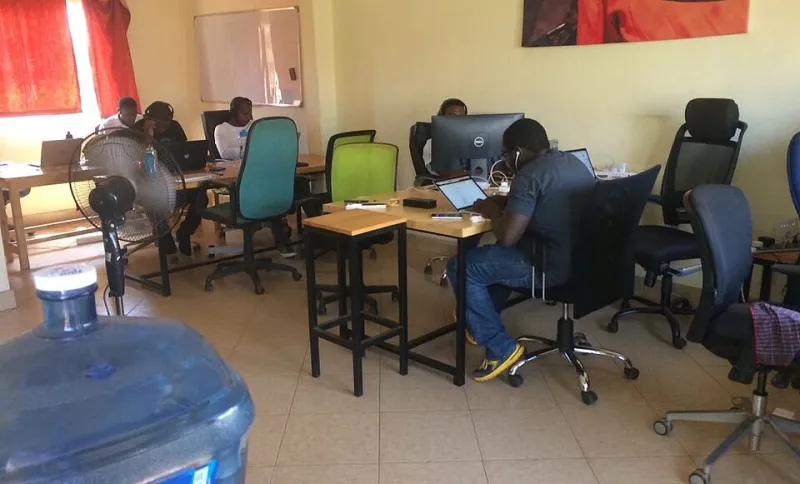
Across Lagos, Nairobi, Accra, and Cape Town, a growing cohort of African software engineers, product designers, and data scientists is commanding salaries that rival — and in some cases exceed — those offered in Western tech hubs. They are doing so entirely from their home cities, leading distributed engineering teams for Fortune 500 companies and high-growth startups alike. The remote work revolution that reshaped American and European offices during the pandemic did not merely create convenience for African tech professionals. It created leverage.
The Platforms Powering the Shift
Several companies have emerged as critical infrastructure for this new talent economy. Andela, founded in 2014 with offices across the continent, pioneered the model of connecting African engineers with global technology employers. After initially operating a fellowship model, the company pivoted to a fully remote marketplace that now places thousands of engineers annually with clients including Goldman Sachs and Coursera. Its success demonstrated something that many US companies had not yet internalized: that engineering excellence was never a function of zip code.
Other platforms have followed and diversified the pipeline. Turing, Toptal, and Remote have all expanded their African talent networks significantly in recent years. Meanwhile, continent-specific players like Gebeya, which operates across East and West Africa, are building talent ecosystems that train, certify, and place engineers into global roles without requiring relocation as a condition of advancement.
Then there are the companies quietly building their own direct pipelines. Several US-based technology firms, including Stripe, Shopify, and a number of well-funded fintech startups, now maintain substantial engineering contributors in African cities — contributors who are not satellite office employees but full members of core product and infrastructure teams.
What African Remote Workers Are Actually Experiencing
The professional reality for African engineers working remotely for global companies is more nuanced than the headlines suggest. The financial upside is genuine and often transformative. An engineer in Lagos earning a US-market salary while maintaining local living costs can accumulate wealth at a pace that would be impossible for a counterpart living in San Francisco or New York, where cost of living absorbs a disproportionate share of even generous compensation packages.
Chidinma Okafor, a senior backend engineer based in Lagos who works for a US-based cloud infrastructure company, describes the arrangement as one of the most economically rational decisions she has ever made. She was offered relocation assistance twice and declined both times. "My salary is indexed to the US market. My rent is indexed to Lagos. That gap is where real financial freedom lives," she explained in a conversation earlier this year. She now owns property in two cities and is an angel investor in two early-stage Nigerian startups.
In Nairobi, Kelvin Mwangi leads a product design team for a European e-commerce company. He manages colleagues across five countries and has never met most of them in person. He notes that the cultural fluency African professionals often develop navigating multilingual, multi-ethnic environments translates directly into an ability to manage globally distributed teams. "I grew up code-switching between three languages and navigating very different social contexts," he said. "Managing a team across Germany, Brazil, and the Philippines feels familiar in ways I did not expect."
The Infrastructure Challenge Nobody Wants to Ignore
The remote work model is not without its friction points, and responsible coverage demands acknowledging them. Reliable power and consistent high-speed internet remain genuine obstacles in many African cities, though the situation has improved considerably. Countries like Rwanda, Kenya, and South Africa have made significant investments in fiber infrastructure, and the expansion of satellite broadband options has extended connectivity into areas previously underserved.
Power instability remains a more persistent challenge, particularly in Nigeria, where engineers frequently invest personally in inverter systems, solar backups, and generator setups to maintain the uptime their global employers expect. These costs are real, and they represent a form of infrastructure subsidy that African remote workers quietly absorb. Some companies have begun acknowledging this by offering remote infrastructure stipends — a practice that more employers should adopt as standard.
Time zone management is another structural consideration. African engineers working primarily for US-based companies often find themselves navigating an overlap window that demands flexibility on both sides. The most successful arrangements tend to be those where US-based teams make genuine accommodations rather than expecting African colleagues to perpetually adjust to Eastern or Pacific time.
Keeping Talent — and Capital — on the Continent
The broader significance of this shift extends well beyond individual career trajectories. When African tech professionals earn global salaries while remaining in their home countries, the economic impact is multiplicative. They spend locally, invest locally, mentor the next generation of engineers locally, and in many cases become founders or angel investors in the very startup ecosystems that produced them.
This dynamic represents a meaningful counter to the brain drain that has historically depleted Africa's technical workforce. It is not a complete solution — structural improvements in local compensation, working conditions, and institutional support remain essential — but it is a powerful and underappreciated mechanism for retaining human capital.
Organizations like the African Leadership University and Moringa School are increasingly designing their curricula with the remote global economy in mind, preparing graduates not just for local employment but for direct participation in the international tech labor market. The pipeline, in other words, is being built with intentionality.
A New Definition of Global
The US technology industry has long defined "global talent" in ways that implicitly required physical proximity to American cities. That definition is becoming obsolete. The engineers building the next generation of fintech infrastructure, AI systems, and cloud platforms are as likely to be working from a high-rise apartment in Nairobi as from a co-working space in Austin.
For African tech professionals, the message is increasingly clear: the world will come to you. For US companies still hesitant to build genuinely distributed teams, the competitive calculus is shifting just as quickly. The talent is there. The infrastructure is improving. And the professionals who have chosen to stay are no longer waiting for permission to lead.